

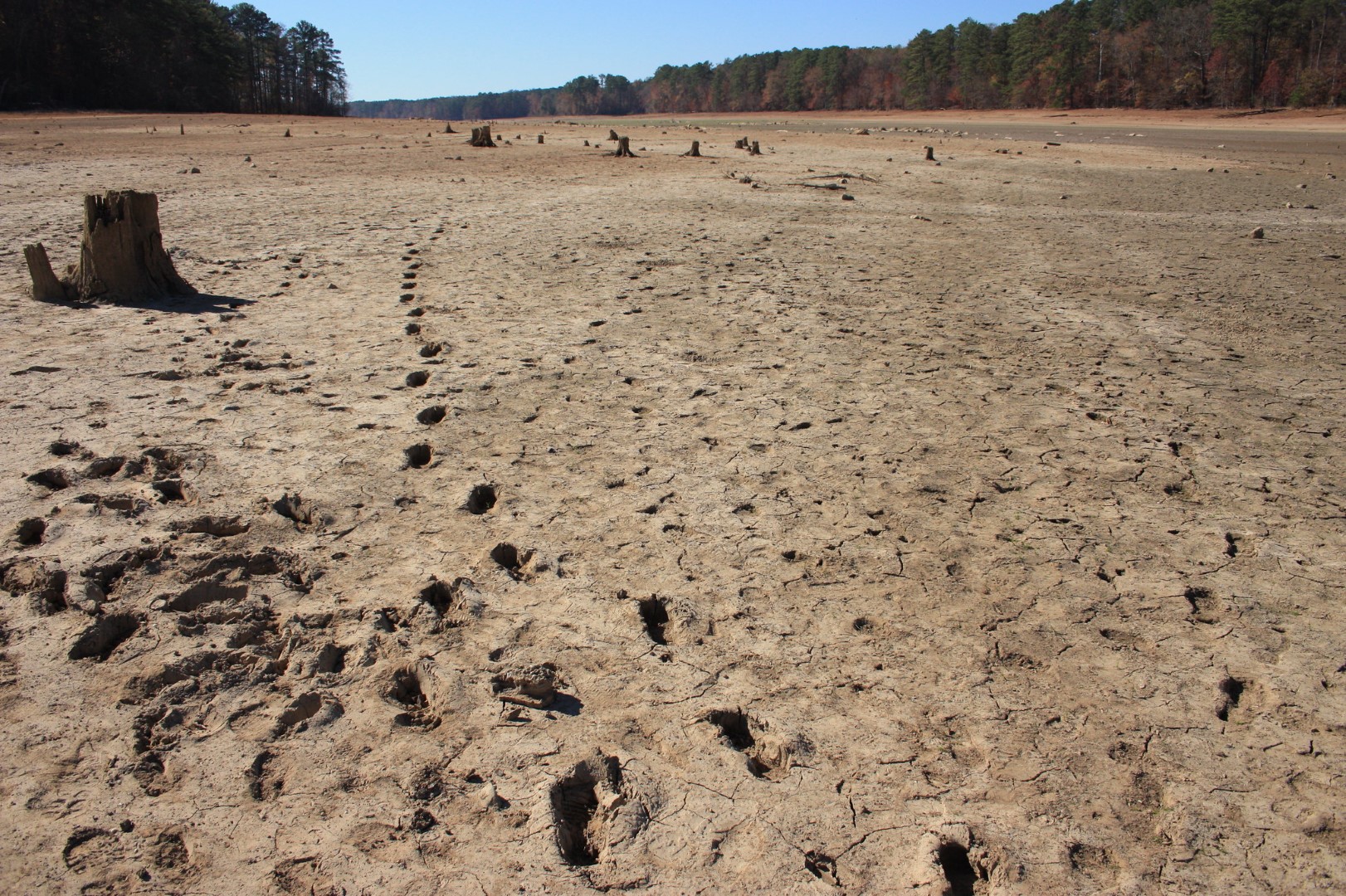
Image Credit: ACES | Bruce Dupree
https://www.flickr.com/photos/alabama_extension/48832143091/
Public Domain
Proper 15 (20), Year A
16 August 2026
Genesis 45:1-15
Psalm 133
Romans 11:1-2a, 29-32
Matthew 15: (10-20), 21-28
As you know, I was away last week. A week ago last Wednesday our son Pascal was married. It was a small and beautiful ceremony. An old family friend came up from Seattle to lead the ceremony. I signed the papers.
It’s a wonderful thing to know your children are loved, not only by you.
I wrote the prayers for last Sunday, as I always do. And I think it was on the day after the kids’ wedding that I thought that I had been amiss in not including prayers for those who fight the forest fires in our Province and in our land, and for all affected by them. I have been amiss and at the same time forest fires have become a regular and predictable backdrop to our summers. Since our air usually comes off the ocean, those of us on the coast don’t often notice.
I do trust that my not including a petition for all affected by the forest fires has not kept you from praying. And yet, I will admit that I have some discomfort with simple prayers for cooler weather or for rain without lightening, or for divine intervention.
It is not that I do not want the fires put out or would not wish for people to be able to return to their homes – that is something I cannot even imagine. The closest we ever came to anything like this was the so called “flood of the century” in southern Manitoba in 1997. Our house was close to the Assiniboine River and below the primary dike. The main beam still had a mark from the waters of the 1950 flood.
My discomfort should also not suggest that God was not the God of all, or that I doubted that God could put out the fires, it is only that God’s involvement in the world usually is more gentle. In Jesus we see that God entered the world as one of us and while Jesus healed many he did not heal all, for his mission was to redeem the world. And so what I am afraid of is that we might misunderstand prayer as magic, as expression of wishful thinking, as – as a neighbour’s sign on their door proclaims: “Everything’s gonna be alright.” I am afraid of this because it leaves us out of the equation, when praying means to welcome God into our lives, which is why we pray that God’s will be done on earth as it is in heaven. Prayer is aligning our lives with God. Prayer is not asking for magic so we do not have to change.
On the first few pages of “The Cost of Discipleship” the Christian martyr and Lutheran pastor Dietrich Bonhoeffer addresses this misunderstanding. He frames it as the difference between cheap and costly grace. The misunderstanding of cheap grace is that it does not enter into a life of discipleship. Bonhoeffer writes,
“Cheap grace means grace as a doctrine, a principle, a system. It means forgiveness of sins proclaimed as a general truth, the love of God taught as the Christian ‘conception’ of God. An intellectual assent to that idea is held to be of itself sufficient to secure remission of sins.
(…)
The essence of grace, we suppose, is that the account has been paid in advance; and, because it has been paid, everything can be had for nothing.
(…)
The world goes on in the same old way, and we are still sinners ‘even in the best life’ as Luther said. Well, then, let the Christian live like the rest of the world, let him model himself on the world’s standards in every sphere of life, and not presumptuously aspire to live a different life under grace from his old life under sin.” This, Bonhoeffer says, is cheap grace.
Bonhoeffer writes in Nazi Germany in 1937. He sees the church capitulate to the inhumanity of the Nazis, and Christians – rather than aligning their lives with the life of Christ – modeling themselves on the world’s standards in every sphere of life. He sees Christians live as if they were not followers of Jesus.
A little while after his treatment of cheap grace Bonhoeffer writes that grace is costly. It is costly first of all because Christ won it at great cost.
“Costly grace is the treasure hidden in the field; for the sake of it a man will gladly go and sell all that he has. It is the pearl of great price to buy which the merchant will sell all his goods. (…) it is the call of Jesus Christ at which the disciple leaves his nets and follows him.
Costly grace is the gospel which must be sought again and again, the gift which must be asked for, the door at which a man must knock.
Such grace is costly because it calls us to follow, and it is grace because it calls us to follow Jesus Christ.”
Bonhoeffer then illustrates this in the life of Martin Luther who, as the world of monasticism was crashing about him, had to again leave his nets and follow. The first time Luther had left everything was when he had entered the monastery. The second time was when left the monastery ‘and did not even get to keep his pious self’.
“[Luther] obeyed the call, (…) simply through the grace of God. Luther did not hear the word: ‘Of course you have sinned, but now everything is forgiven, so you can stay as you are and enjoy the consolations of forgiveness.’ No, Luther had to leave the cloister and go back to the world (…)”1
Bonhoeffer says that grace and discipleship are inseparable because the call to follow Jesus is grace.
And this suggests that living with God is not just therapeutic or feel-good or even just forensic but life changing. And if being a follower of Jesus is life changing then looking at the fires here, or in Ontario, or in Washington, or in Europe (not to mention the low water levels in Europe and low snow packs here) must do more than make us pray for rain, give to relief efforts, and otherwise leave us unchanged. We know that looking at the world did not leave our unchanging God unchanged but compelled God to enter into the world.
The theological ethicist Michael Northcott says that there are two foundational biblical stories in which individuals act prudentially to stave off climate disasters. The first story is the story of Noah and the Flood. The second story is the story of Joseph, which brings us to today’s reading from the Old Testament.
The Joseph story speaks of divine providence and of forgiveness. Yet it also speaks of the role that climate plays in the shaping of civilizations. It is Joseph’s God given gift that allows him to interpret Pharaoh’s dreams and in the light of the coming famine to establish a regime that would distribute food equitably in order to save many lives. When Joseph reveals himself to his brothers he says, God sent me before you to preserve life. (45:5)
The Joseph story shows us how God never abandons us, and how God uses Joseph’s undeserved suffering to bring about the salvation of God’s beloved.
The fathers of the early church understood the Joseph story as an analogy for Christ: Just as God preserved his people through the undeserved suffering of Joseph, so God redeems the cosmos through the undeserved suffering and patient endurance of his Son Jesus Christ.
The account of the drought and famine in the Joseph story likely reflects the memory of a great drought in the ancient Near East. This is supported by studies of Greenland ice cores that indicate that a 300 year drought began around 2200 BC.2
We know that ocean currents, the salinity and temperature of the oceans, and the quantity of phytoplankton and other life forms they sustain, are critical determinants of atmospheric gases and hence of the earth’s climate. And we know that it only became possible for the earth to sustain human agriculture and therefore sustain urban civilization when the pattern of extreme climate fluctuation changed and the earth settled into a more stable climate pattern (at the end of the last ice age).3
By God’s providence Joseph mitigated the consequences of the famine for Egypt and for the region, including what would then become the twelve tribes of Israel. However, we note that Joseph did so through the establishment of a centralized regime that later was used to enslave God’s people, as Israel ends up in bondage.
It is helpful for us to also take a quick look at the Noah story. It is not only a story of human survival in the face of a climate catastrophe but it is also a moral tale in which the flood is seen as divine punishment for a generation of people whose wickedness polluted and endangered the earth.4
Not unlike Joseph, Noah is a redemptive figure who anticipates the redeeming work of Christ. But for us who want to learn from these biblical stories, we notice the difference between the managerial style of Joseph and Noah who builds the ark.
The Noah story tells us that Noah is mocked by his neighbours, as Joseph may also have been, as are those who warn of climate change today. But Noah and Joseph remained undeterred. Rabbinic commentators suggest that Noah’s careful attention to the needs of animals and other creatures was the key lesson of the Noah story. It is as if God has Noah build the ark to train him in caring for creation. Michael Northcott comments that the story reflects the moral and spiritual insight that only when humans acknowledge the sacred character of creation and recognize divine limits on human action will their reproduction and work within creation not result in its destruction and pollution.5 The mark of sin, the Bible tells us, is to assume the place of God. Therefore, to believe that technology or administrative declarations could fix our problems is to live in denial of our sin and of our predicament.
And this brings us back to our prayer petitions and to wildfires, and to natural disasters that we have traditionally regarded as beyond our control, which is why we call them natural. Yet to suggest that the totality of them as well as their increasing frequency has nothing to do with us is the denial of human agency and of Jesus’s call to follow. It is what Dietrich Bonhoeffer calls cheap grace.
If grace and discipleship are inseparable, as Bonhoeffer tells us, then this means that discipleship is in fact grace, it is the gift of living not according to our own will but according to God’s will. Like prayer, discipleship is about aligning our life with that of God, with that of Christ. And God’s will, we know, is always to save: Joseph and his family and the Egyptians, God’s people whom God foreknew (Romans 11), the Canaanite woman, and even his disciples of whom Jesus does not grow tired.
May we, by the grace of God, seek the treasure hidden in the field and for its sake sell all that we have. May we, by the grace of God seek the pearl of great price. May we, by the grace of God, answer the call of Jesus Christ, leave our nets and follow him and align our lives with his.
Amen.
1 Dietrich Bonhoeffer, Nachfolge (Dietrich Bonhoeffer Werke), München: 1989 Christian Kaiser Verlag, pg.29 ff. An English version can be found here.
2 Michael S. Northcott, A Moral Climate – the ethics of global warming, Maryknoll, NY: 2007 Orbis Books, page 75
3 Ibid. page 73-74
4 See Genesis 6:13. The narrator remembers that the sin of Adam and Eve was not only to effect their children but the earth itself.
5 Northcott, page 73