

click to access archived live stream
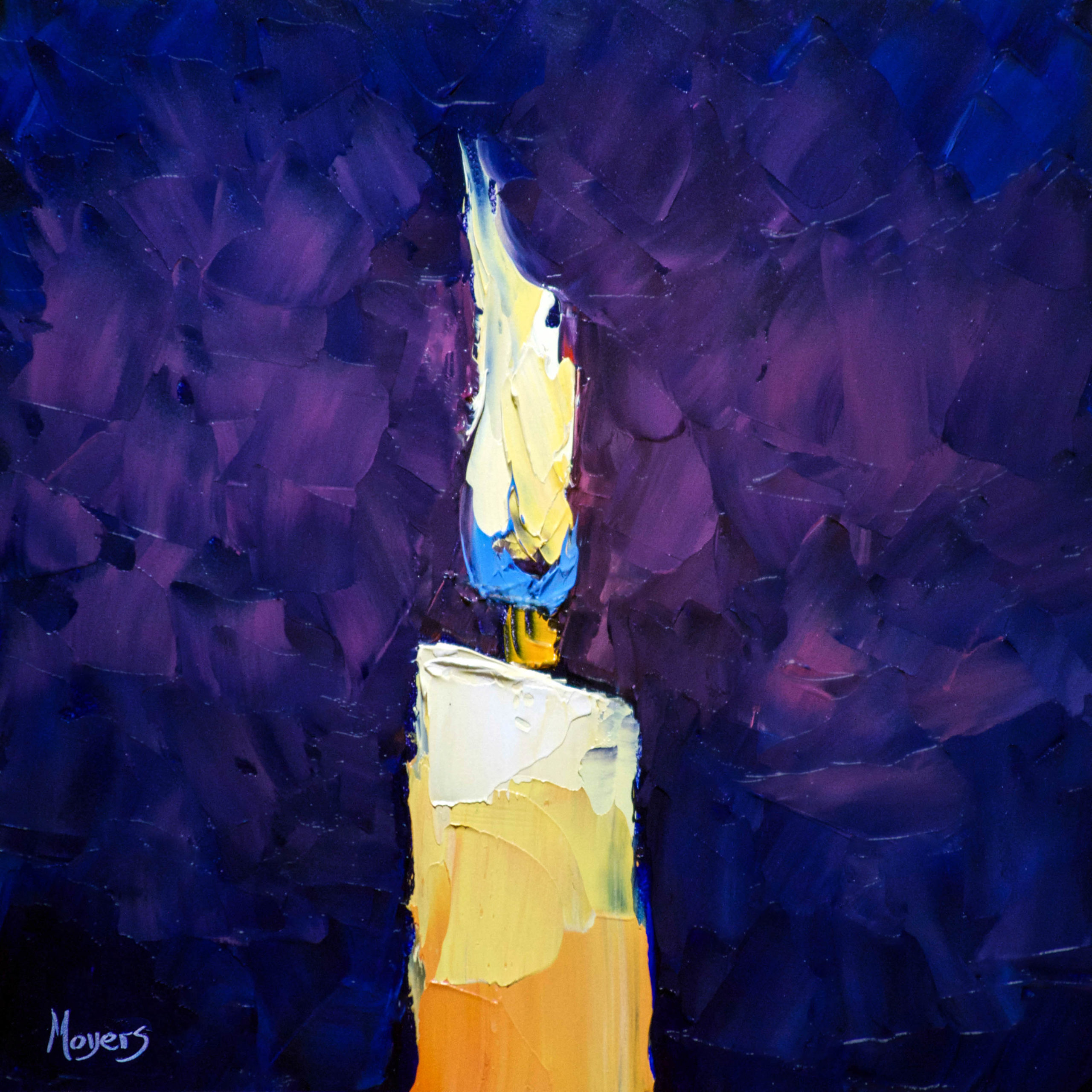
Image Credit: Shine, by Mike Moyers (https://www.mikemoyersfineart.com/)
The artist has granted permission for the non-commercial use of this image with attribution. From Art in the Christian Tradition, a project of the Vanderbilt Divinity Library, Nashville, TN. https://diglib.library.vanderbilt.edu/act-imagelink.pl?RC=57144 [retrieved February 5, 2026].
Fifth Sunday after the Epiphany, Year A
8 February 2026
Isaiah 58:1-9a (9b-12)
Psalm 112:1-9 (10)
1 Corinthians 2:1-12 (13-16)
Matthew 5:13-20
This past week I came upon a statement by someone about unity and division in the Church.
It goes like this:
“The most important divide in the Christian church is not between East and West, not between Protestant and Catholic, not between Fundamentalist and Liberal, but between those who center the poor and those who center the powerful. This – more than theology, more than liturgy, more than anything else – determines the lived shape that faith takes.”1
The statement appeals to me on an experiential level. It confirms my experience. I have met people with such deep passion for others that the Christian tradition they came from made little difference, except to contemplate which community produces beautiful people like them. And it confirms my experience because centering the poor, as Jesus did and as the prophet Isaiah calls us to in today’s first reading, shows our love of God, for it moves us away from the centre.
This has nothing to do with banal statements, sometimes made after someone has died, that because they were a good person they will surely go to heaven. The problem with a statement such as that is that it has little room for God, for whether we go to heaven would only depend on us.
If, however, we think the above statement about what shape our faith takes makes sense, we will want to keep in mind that it is the triune God who gives us such love that allows us to decenter ourself by focusing on the poor and the marginalized.
When Jackie and I were in Chicago last summer we shared an Airbnb with a fellow from Los Angeles, a retired professor from Fuller Seminary. We would spend a bit of time together following the day’s presentations and he shared with us how his congregation supported immigrant communities, by delivering food to families so they do not have to leave the house and risk their safety; by providing gift cards for delivery services for the same reason, and by showing up at court, for doing so always lowered the temperature and created accountability for the potential presence of immigration officers. One of our friends spoke with him last week and there was more conversation about what his church was doing, and he said, “You know the thing about the time we live in is that is very clear what the Church needs to do.”
It hasn’t always been that clear, and perhaps it is not that clear to us.
In the world of politics it’s been said that the rules-based order is coming to an end. It’s been said frequently of late and as much as we do not like it, it is probably true.
There are some moments I remember from the end of the Cold War.
I remember the triumphalism of the West that effectively killed any introspection we may have had. The fact that we had won the cold war proved us right in all our ways, at least that is largely how we proceeded. This is not to say that I did not rejoice when Stalinist regimes fell and the oppression they had enacted came to an end.
Another moment I remember was expressed in an article by a Max-Planck-Institute sociologist early in this century. The author was writing about information technology and the fact that this meant that people can always be reached, even long after they have gone home, and even when they are on holiday. My brother was visiting in 2005 and we were on a short hike on Keats Island when a client from Munich called. The sociologist wrote that just as communism had collapsed we were recreating the conditions that had led to the rise of communism in the first place. It was a more sustained argument but I think you get the idea. I wish I still had the article.
The last thing I remember from those early days of this century is a statement I read about the West that suggested that our common values have been slowly eroding and that the only common value we have left is prosperity. But if prosperity is our only commonly held value then help us God.
The common belief following the Enlightenment was that society could sustain moral order without shared worship or a shared hope. After the wars of religion one surmised that religion, when it makes moral claims, is socially divisive. The solution was to cultivate a religion that either mandates only the least controversial norms (as in love your neighbour) or mandates nothing at all. The result, says the theologian Robert Jenson, is antinomian religion: a church rich in ritual and language but emptied of binding moral command. God becomes our affirmation (as in “God loves you”) but is no longer the giver of law. In such a world “legalism” and “judgmentalism” become the unforgivable sins.2
It is in this moment that Jesus says to us, You are the salt of the earth, but if salt has lost its taste, how can its saltiness be restored? It is no longer good for anything but is thrown out and trampled under foot. You are the light of the world. A city built on a hill cannot be hid.
It is important to notice that Jesus does not say that we should be but that we are. By virtue of our baptism and the gift of the Holy Spirit, we are the salt of the earth and the light of the world. Now there are imperatives that follow, particularly in the Sermon on the Mount (like the love of our enemies), but we begin with a blessing. God has made us salt and light. Only after this blessing does Jesus tell us what that means and that we now should go and live like we belong to him.
And this is the context in which Jesus affirms the validity of the Law, of the Torah: “Do not think that I have come to abolish the Law or the Prophets; I have come not to abolish but to fulfill. 18For truly I tell you, until heaven and earth pass away, not one letter, not one stroke of a letter, will pass from the law until all is accomplished.”
This may be awkward for us who have come to believe that we have left the Law behind, yet the way in which Jesus confirms the importance of the Law, of the Torah, follows the prophet Jeremiah who announces that the Law will no longer be external but internal: this is the covenant that I will make with the house of Israel after those days, says the Lord: I will put my law within them, and I will write it on their hearts; and I will be their God, and they shall be my people. 34No longer shall they teach one another, or say to each other, ‘Know the Lord’, for they shall all know me, from the least of them to the greatest, says the Lord … (Jeremiah 31)
I believe that it is true that modernity has come to believe that a common ethics, that common values do not require a common faith and a common hope. This illusion seems to falling apart before our very eyes, for things are happening, and done, and said, that we never thought to be possible.
This however, does not leave us without hope, for we are the people of God, we are people of hope. Our hope lies in God’s work of redemption in Jesus and the outpouring of the Holy Spirit upon the Church. Regardless of what is happening around us, we are the salt of the earth and the light of the world. We can claim this, and live as if we believed this to be true. We can centre the poor and decenter the powerful, we can center God and decenter ourselves. We may not fix the whole world, after all, we are not the Saviour, but we can witness to the Saviour. The world needs the Church’s witness.
Amen.
2 Jason Micheli, When churches render God morally harmless, they abandon the public world to power – Robert Jenson on the Moral Corrosion of Our Politics, 5 February 2026. See also, Robert Jenson, How the World Lost Its Story, in First Things, October 1993